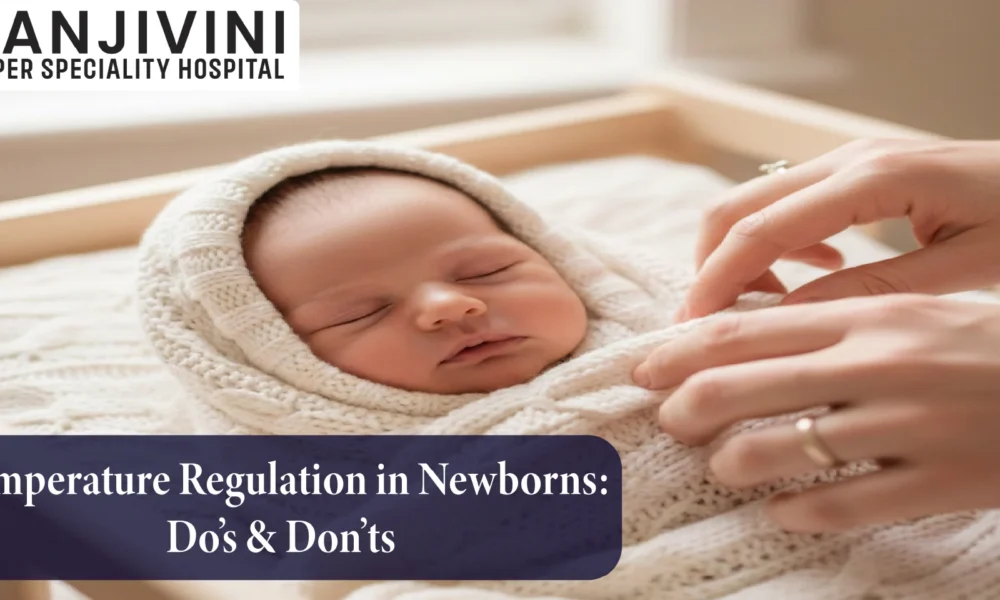
Temperature Regulation in Newborns: Do’s & Don’ts
Medically Verified by – Dr Jitendra Singh M.B.B.S, M.D (Pediatrician & Neonatologist)
Keeping the newborns at correct temperature matters a lot in the early days. As babies cannot control their body heat the way adults do. Their bodies is still learning how to adjust. And because of this, they can get cold or too warm very easily. Even a small changes in the room temperature can affect how they feel and how their body responds.
Knowing temperature regulation in newborns will helps parents understand what is normal or not. As it will them notice whenever something feels off. Learning the basics make it super easy to keep baby comfortable at home and avoid problems like getting too cold or feeling overheated.
Importance of Temperature Regulation in Newborns
Newborn temperature regulation is still immature that’s because the babies have a larger body surface area as compared to their weight and very little body fat. Due to which it causes rapid heat loss in newborns and that too right after birth. Additionally, their nervous system is also not yet fully developed which limits their ability to shiver or sweat properly.
If newborn thermoregulation is not maintained properly then it might lead to serious problems such as hypothermia in newborns or overheating in newborns and both of which can affect feeding, breathing, and growth of newborn.
Normal Body Temperature of a Newborn
The normal body temperature of newborn is between 36.5°C and 37.5°C when checked from the axilla (armpit). Slight variations are common yet temperatures outside this range needs doctors’ attention.
Newborn Temperature After Birth
Just after the baby is born his or her temperature may drop due to exposure to air, wet skin, and separation from the mother. This is why many hospitals do focus on temperature control in babies during the time of delivery and postnatal care.
How Newborns Regulate Body Temperature
Newborns depend mainly on external support to maintain their body temperature and that’s why parents and caregivers play a crucial role in this.
Key Factors Affecting Newborn Body Temperature
- Ambient room temperature
- Clothing and wrapping
- Make skin-to-skin contact with baby
- Proper feeding and hydration of baby
- Overall health of the baby
This delicate process is called as newborn thermoregulation and it requires constant attention during the early days of life, and that’s why parents can consult a neonatologist near me at Sanjivini Super Speciality Hospital.
Heat Loss in Newborns
The newborns lose heat faster than the adults. Here are the 4 types of heat loss in newborns that parents should know so as to prevent temperature-related problems.
1. Heat Loss by Evaporation
Occurs when moisture on the baby’s skin evaporates, especially immediately after birth.
2. Heat Loss by Conduction
Happens when a baby comes in contact with cold surfaces like weighing scales or metal tables.
3. Heat Loss by Convection
Occurs when cool air flows over the baby’s body, such as from fans or air conditioners.
4. Heat Loss by Radiation
It happens when heat is lost to any nearby cold objects, even without any direct contact.
All of these contribute to cold stress in newborns if preventive steps are not taken.
Cold Stress and Hypothermia in Newborns
It happens when the body temperature of baby drops below the normal range which forces the body to use the extra energy to stay warm.
Cold Stress in Newborn Symptoms
- Cool hands and feet
- Poor feeding
- Lethargy
- Weak cry
- Pale or mottled skin
If left untreated, cold stress can progress to hypothermia in newborns, which is a medical emergency.
Signs of Low Body Temperature in Newborn
Parents should monitor for the following signs:
- Body temperature is below 36.5°C
- Cold chest or abdomen
- Less activity
- Slow breathing
If you notice any or all of these signs give your newborn warming and get medical consultation if necessary.
Overheating in Newborns
Keeping a baby warm is important but sometimes the overheating in newborns can be harmful as well.
Signs of Overheating in Babies
- Sweating
- Hot or flushed skin
- Rapid breathing
- Restlessness
- Heat rash
Overheating can increases the risk of dehydration and even lead to discomfort and must be avoided.
Ideal Room Temperature for Newborn
The ideal room temperature should be somewhere between 22°C to 26°C. This range works best as it helps maintain the newborn body temperature without even causing heat stress or cold exposure.
Tips for Maintaining Room Temperature
- Avoid direct fan or AC airflow on the baby
- Use light blankets if needed
- Monitor room temperature with a thermometer
How to Keep Newborn Warm Safely
Knowing how to keep newborn warm without overheating is a key part of newborn care tips.
Safe Warming Practices
- Use soft cotton clothing
- Cover the head lightly in colder weather
- Practice skin-to-skin contact
- Feed regularly
One of the best methods is kangaroo mother care temperature control, where the baby is placed or given skin-to-skin on the mother’s chest. As this method will naturally regulate the newborn’s temperature and strengthen bonding and breastfeeding as well.
How to Dress a Newborn in Summer
During warm months:
- Use light cotton clothes
- Avoid overdressing
- One layer is usually enough
- Keep the baby hydrated through frequent feeds
How to Dress a Newborn in Winter
In colder weather:
- Dress the baby in one extra layer than adults
- Use socks and caps
- Don’t put heavy blankets on the face
- Make sure there is proper ventilation
Correct dressing plays a major role in temperature control in babies.
Do’s and Don’ts of Newborn Care for Temperature Regulation
Do’s
- Monitor newborn temperature regularly
- Maintain ideal room temperature
- Practice kangaroo mother care
- Keep the baby dry
- Seek help if unsure
Don’ts
- Do not expose newborns to cold air
- Do not overdress or wrap tightly
- Do not place baby near heaters or direct sunlight
- Do not ignore temperature changes
Following these do’s and don’ts of newborn care helps prevent both hypothermia and overheating.
Best Pediatric Hospital in Lucknow – Sanjivini Super Speciality Hospital
Sanjivini Super Speciality Hospital in Lucknow is a trusted women’s and children’s hospital offering comprehensive Pediatrics and Neonatology services. The hospital follows advanced protocols for newborn temperature regulation and early neonatal care. What parents can get access to:
- Best pediatrician in Lucknow
- Expert guidance from neonatologists
- Advanced newborn monitoring
- Kangaroo mother care support
- Education on newborn care tips
- Safe and family-centred care
Being the best paediatric hospitals in Lucknow, i.e., Sanjivini Hospital make sures every newborn gets the warmth, safety, and medical attention required for their healthy growth.
Final Thoughts
Temperature regulation in newborns is a delicate but manageable aspect of early care. By understanding how newborns regulate body temperature, recognizing early warning signs, and following safe do’s and don’ts, parents can protect their baby from cold stress and overheating.
For all those parents looking for children hospital near me they can make a visit to Sanjivini Super Speciality Hospital because here their newborn will be provided the highest standard of neonatal support from birth onwards.

Role of Folic Acid Before Pregnancy
Folic acid before pregnancy supports healthy conception by improving egg quality, regulating ovulation, and preventing neural tube defects. Since most.
Read More
Why Newborns Make Funny Faces While.
Newborns often make funny faces while sleeping, such as smiling, twitching, or frowning. These expressions are a normal part of.
Read More