

Medically Verified by – Dr Humaira Siddiqui M.B.B.S, M.S (Obs & Gyne)
Labour starts on its own when the body and the baby are ready. Sometimes it does not. And in those cases the doctors may start labour on purpose. This process is called induced labour. It is done to keep both mother and baby safe.
Knowing what labour induction is can make things feel clearer. It helps to know why it is suggested. It also helps to know what all happens during the process. Some people want to understand how it is different from natural labour.
This guide explains induction in simple words. It covers the process and explains the reasons for it. It talks about safety and also clears up common misunderstandings.
What Is Induction of Labour?
The induction of labour definition refers to the medical process of stimulating uterine contractions before labour start on its own. The goal here is to help achieve a normal vaginal delivery. Doctors use medicines or procedures to start contractions. This is done when staying pregnant is riskier than delivering the baby.
Labour induction is planned in advance. It is closely monitored throughout. It is done only when there is a medical need or when the benefits are greater than the risks.
When Do Doctors Recommend Induced Labour?
Doctors suggest medical induction of labour based on the health of mother and baby. They also look at how far the pregnancy has progressed. Below mentioned are common situations when the labour may be induced.
Reasons for Induced Labour
- Pregnancy goes beyond 40 or 41 weeks.
- The mother has high blood pressure or preeclampsia.
- Gestational diabetes is another reason.
- Low amniotic fluid can also lead to induction.
- Sometimes the water breaks too early.
- Slow growth of the baby is another concern.
- Maternal infections may make induction necessary.
- Problems with the placenta are another reason.
- Some high-risk pregnancy conditions also require it.
Cases like these is where doctors decide when labour is induced to reduce complications and improve delivery outcomes.
Is Induced Labour Safe?
Many mothers worry about whether induced labour is safe or not. This is another very common question but induced labour is safe when doctors recommend it. It is done under the care of experienced specialists.
At Sanjivini Super Speciality Hospital in Lucknow, this process is very closely monitored. Trained doctors and nurses are present 24/7 and baby and mother are both watched using proper monitoring systems. But remember that like any other medical procedure, the induced labour process can also have some risks. These are explained clearly before anything begins.
Induction of Labour Methods
Doctors choose the method based on cervical readiness, gestational age, and maternal health.
Common Induction of Labour Methods
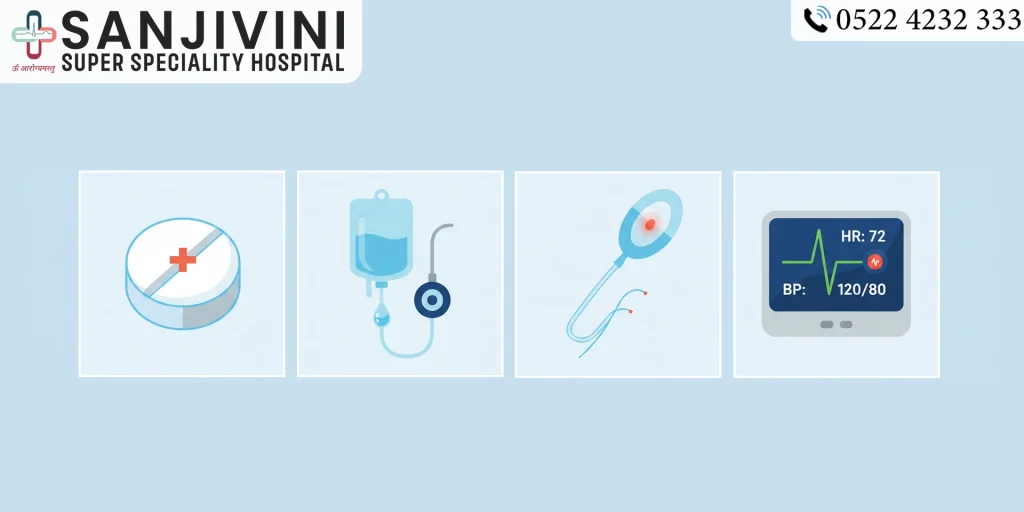
- Medications (Prostaglandins): This is used for soften and open the cervix.
- Oxytocin Drip: It helps to initiate or strengthen the contractions.
- Artificial Rupture of Membranes: This is done breaking the water to stimulate labour.
- Mechanical Methods: For balloon catheter to dilate the cervix gradually.
Each of these methods is part of a carefully planned induced labour process. The approach is chosen based on the individual pregnancy.
Induced Labour Process: What to Expect
Now, let’s know the step-by-step process that could really help to reduce fear and anxiety.
Step-by-Step Labour Induction
- Pre-induction assessment of cervix and fetal well-being
- Administration of induction medication or method
- Monitoring contractions and baby’s heartbeat
- Pain management support if needed
- Progression to active labour and delivery
The how long does induced labor take depends on cervical readiness and individual response. It may take a few hours to more than a day and mostly for first-time pregnancies.
Does Induced Labour Hurt More?
Induced contractions does feel stronger or may start suddenly as compared to natural labour. However the pain levels vary widely and depend on:
- Individual pain tolerance
- Induction method used
- Cervical readiness
- Availability of pain relief
Modern maternity care offers multiple pain management options, including breathing techniques, epidural anesthesia, and supportive care to manage induced labour pain effectively.
Induced Labour vs Natural Labour
Both of these have the same end goal, i.e., a safe delivery. The difference actually lies in how the labour started.
- Natural Labour: It starts spontaneously and does not need medical intervention.
- Induced Labour: This is started medically due to health purposes.
Unlike induced labour, natural labour begins on its own. Knowing the signs of natural labour can help expectant mothers understand when the body is ready for delivery and how induction differs from spontaneous labour.
While natural labour is preferred when possible, induced labour becomes necessary when waiting could increase risks.
Induced Labour Risks
Although induction is safe in most cases, some potential induced labour risks include:
- Stronger contractions
- Longer labour duration
- Need for assisted delivery
- Slightly increased chance of cesarean section
- Uterine hyperstimulation (rare with monitoring)
Choosing the best maternity hospital in Lucknow with experienced staff significantly reduces these risks.
Myths About Induced Labour
Let’s clear some common myths about induced labour:
Myth 1: Induced labour always leads to C-section
Not true. Many women deliver vaginally after induction.
Myth 2: Labour induction is unsafe for the baby
When done under medical supervision, it improves safety.
Myth 3: Induced labour pain is unbearable
Pain is manageable with modern pain relief options.
Myth 4: Doctors induce labour for convenience
Induction is recommended only when medically justified.
Choosing the Best Pregnancy Hospital in Lucknow

Labour induction requires expertise with that advanced monitoring and emergency readiness. That’s why choosing the right healthcare provider matters. Because of that Sanjivini Super Speciality Hospital is among the leading centres for gynaecology and obstetrics, providing:
- Advanced labour and delivery units
- Top gynecologist in Lucknow
- Best lady doctor for pregnancy
- 24/7 fetal monitoring
- Expert obstetricians
- Neonatal intensive care support
- Personalized pregnancy planning
Why many women trust the Sanjivini Hospital as because its supported by a team of top gynecologists in Lucknow and experienced pregnancy specialists as well.
Frequently Asked Questions
How long does induced labour take?
It can range from a few hours to even more than 24 hours, it depends on cervical readiness and response.
Is induced labour more painful than natural labour?
Pain at first feels stronger, but later with pain relief options will help manage the discomfort effectively.
Can I request labour induction?
In some cases the elective induction could be considered but the doctors will evaluate safety before proceeding with it.
Is induced labor safe for first-time mothers?
Yes induced labor is safe even for first-time pregnancies but should be properly monitored and given good care.
Where can I find the best doctor for pregnancy near me?
Here at Sanjivini Hospital the best pregnancy doctor in Lucknow provide comprehensive maternity care.
Final Words
Labour induction is done when doctors feel it is safer for either the mother or baby. It is a medical decision and not something done without reason, that’s why knowing why it is needed and how it works help reduce your fear and feel more prepared and confident.
At the Sanjivini Super Speciality Hospital in Gomti Nagar Lucknow labour induction is closely monitored. Here the doctors and staff focus on safety and care at every step. They even handle both routine and high-risk pregnancies with the same attention as well.
Choosing the best gynaecology hospital near me and an experienced pregnancy doctor can really change how you experience childbirth.