

Medically Verified by – Dr Jitendra Singh M.B.B.S, M.D (Pediatrician & Neonatologist)
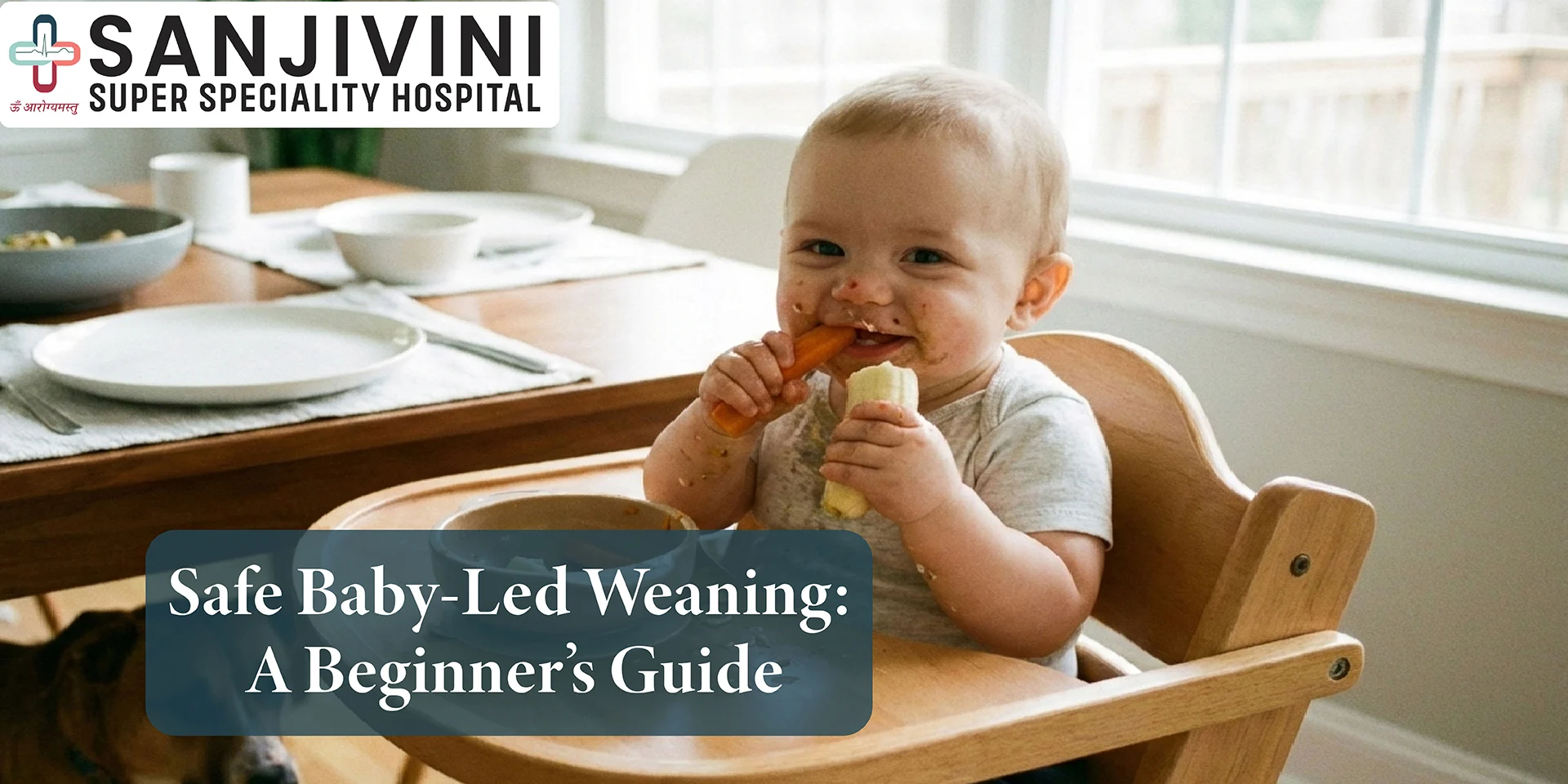
Introducing solids might be one of the exciting milestones for both the baby and parents. And for that many families choose the safe baby-led weaning method. In this method, the babies try to feed themselves instead of being spoon-fed. They grab the food and try it. They learn as they go. It feels more natural for many parents.
This way of eating also helps babies build motor skills. It helps them learn to chew. Also helps them to know when they are hungry and when they are full.
But at the same time, you need to know when to start using this method. You also need to know which foods to give as well. When you understand these basics, then this whole process feels a lot easier. This baby-led weaning guide explains everything in a very simple way for beginners.
What Is Baby-Led Weaning?
Baby-led weaning or even called BLW is a way of feeding where the baby feed themselves soft foods instead of being spoon-fed. According to pediatric experts, the baby-led weaning approach encourages independence and supports motor skill development when practiced safely.
A type of complementary feeding, starts around six months. This is the time when babies still drink breast milk or formula, as then solid foods are introduced alongside it. As it supports infant nutrition as well as good for child growth and development. Baby-led weaning for beginners:
- Builds independence and self-feeding skills in baby
- Improves their hand and eye coordination
- It even helps babies learn how to chew
- Baby knows when they feel hungry and when they are full
- It allows them to join family meals and feel included at the table
Signs Baby Is Ready for Solids
Before starting baby-led weaning at 6 months, take a moment to look at your baby and not just his or her age. As what really matters is whether your baby is developmentally ready or not. The common signs baby is ready for solids can be:
- He or she is sitting with minimal support
- The baby has a good head and neck control
- The baby is showing interest in food
- Can grasp objects and bring it near mouth
- Reduced tongue-thrust reflex
Benefits of Baby-Led Weaning
On practicing safe baby-led weaning offers numerous developmental and nutritional advantages. Key benefits of baby led weaning are these:
- Improved chewing and oral motor development
- Better appetite regulation and less overeating risk
- Get exposure to diverse textures and flavours
- Enhanced independence and confidence
- Easier transition to family foods
These advantages of weaning are very beneficial for long-term healthy eating patterns when combined with balanced infant nutrition.
As children grow into toddler years, eating challenges may still appear, and parents can learn practical solutions in our guide on picky eaters: smart strategies that actually work.
Baby-Led Weaning vs Spoon Feeding
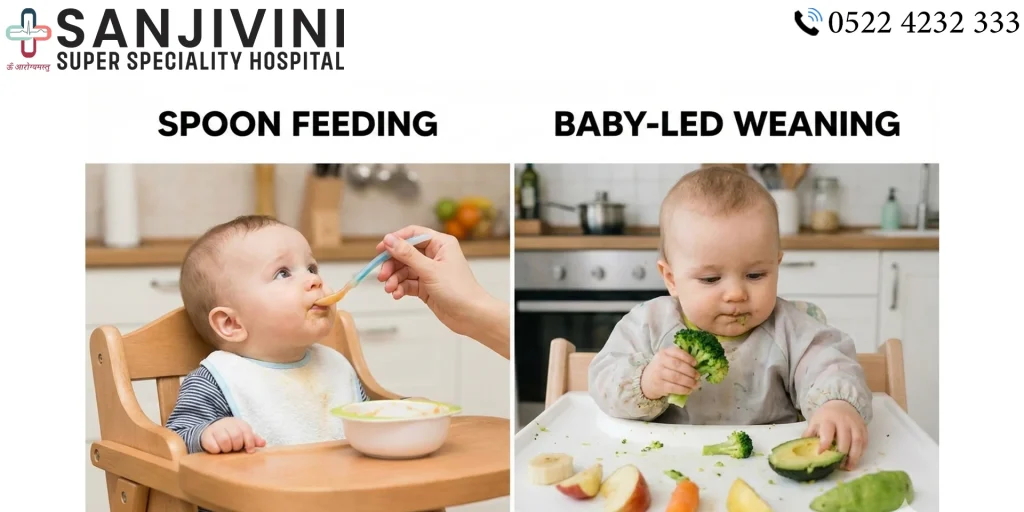
Baby-Led Weaning:
- Baby controls feeding pace
- Encourages self-feeding skills
- Focuses on whole foods and textures
Spoon Feeding:
- Parent controls intake
- Easier to monitor quantity
- Often begins with purées
Many families use a combination approach, that is acceptable if all the nutritional needs are met.
Baby-Led Weaning First Foods
It is important to choose the right foods as for safe baby-led weaning. Food must be soft and easy to hold, plus safe to chew with gums. Baby-led weaning first foods to give are:
- Eat steamed vegetable sticks (carrot, sweet potato, pumpkin)
- Soft fruits banana, avocado, ripe pear
- Eat cooked pasta or rice is also good
- Scrambled eggs
- Paneer strips are another good option
- Well-cooked lentil patties
These also work well as finger foods for babies 6 months.
Baby-Led Weaning Foods Size and Texture
Food preparation plays a very big role in safety. Must follow these guidelines:
- Give foods in finger-length strips (maybe about adult finger size)
- Ensure the texture of food is soft enough to mash with fingers
- Avoid giving any type of hard, round foods like nuts or carrots
- Slowly introduce smaller pieces as the chewing improves
Proper food size will lessen the risk of choking and supports baby self-feeding tips effectively.
Choking vs Gagging in Baby-Led Weaning
Parents worry a lot about choking, but gagging is common and protective.
Gagging:
- Noisy coughing or spluttering
- Tongue pushes food forward
- Baby remains responsive
Choking:
- Silent or struggling to breathe
- Skin turning blue
- Requires immediate intervention
Understanding choking vs gagging baby-led weaning differences will help parents to stay calm and respond appropriately.
Baby-Led Weaning Safety Tips
Practicing safe baby-led weaning requires consistent supervision and preparation too. Important baby-led weaning safety tips are as follows:
- Always keep your baby in an upright position during meals
- Don’t leave the baby unattended while eating
- Don’t give honey, whole nuts, popcorn, hard foods
- Introduce one new food at a time
- Be calm and allow the baby to explore the textures of food
If your baby is premature or has got any medical concerns. Get pediatric feeding guidance by consulting the best pediatrician in Lucknow and that too hereat Sanjivini Super Speciality Hospital.
Baby Nutrition After 6 Months
Milk remains the primary nutrition source first of all, but solids gradually increase. General guidance:
- Offer only breast milk or formula before meals initially
- Give food rich in iron like lentils, eggs, fortified cereals
- Provide variety across various food groups
- Follow the baby hunger cues rather than any fixed quantities
Baby-Led Weaning Meal Ideas
Below mentioned is a simple baby-led weaning meal ideas for beginners:
- Breakfast: Give soft fruit slices along with scrambled eggs
- Lunch: Give steamed vegetable sticks with rice
- Snack: Give yogurt with mashed bananas
- Dinner: Give soft dal with vegetable patties
Consistency matters more than the quantity and that too during the early stages.
When to Seek Professional Feeding Guidance

Some babies just need that little bit of extra support and that too if they have got feeding difficulties, slow weight gain or other type of medical concerns. In cases like these, the best thing to do is to consult an expert from the Pediatrics and Neonatology department here at Sanjivini Super Speciality Hospital in Lucknow.
It’s one of the best pediatric hospitals in Lucknow. Plus, parents can get proper feeding guidance, get some nutrition advice as well as regular growth monitoring for their baby. The right medical support can make sure your baby starts complementary feeding safely and confidently.
Frequently Asked Questions
When to start baby-led weaning?
Start when the baby is six months old. As it’s the time when they can sit with support and show interest in food.
How to prevent choking during baby-led weaning?
Ensure the food is soft and cut in finger-length pieces. Plus, sit your baby in an upright position while eating and avoid giving any type of hard or round foods as it may block the airway.
Is it necessary to consult a doctor before starting BLW?
Yes it is because if your baby is premature or has got any health conditions, then consulting a pediatrician or a neonatologist near me is recommended before starting solids.
Which hospital should I visit for feeding concerns?
You can visit a good children hospital near me or the best paediatric hospital like Sanjivini Hospital in Lucknow for expert evaluation and growth monitoring.
What are the signs baby is ready for solids?
Common signs could be good head control and ability to sit with support. And showing interest in food, even reaching for food and reduced tongue-thrust reflex. These are signs that appear around the 6 months and indicate readiness for complementary feeding.
Pingback: zestoretic
Pingback: atorvastatin 20 mg
Pingback: metoprolol succ
Pingback: levitra 20mg
Pingback: what is ciprofloxacin
Pingback: tetracycline teeth
Pingback: lamotrigine generic
Pingback: misoprostol precio