


Medically Verified by – Dr Jitendra Singh M.B.B.S, M.D (Pediatrician & Neonatologist)
The change in the head shape of a baby is something that is noticed by many parents in the starting months. It is normally due to the fact that the skull bones are soft and still developing. Long-term flattening can be an indication of flat head syndrome in babies as this is a common and typically harmless condition which gets better with early care and positioning changes.
Understanding this syndrome enables the parents to take proactive steps early before it is too late and to support healthy development of head shapes without unnecessary worry.
What is Flat Head Syndrome in Babies?
Flat head syndrome or plagiocephaly in babies is a condition where a section of the head of the baby gets flattened as a result of constant pressure applied on the same spot usually while sleeping or resting. This condition is also known as positional plagiocephaly, and according to the Mayo Clinic, it is commonly related to infant positioning during early months of life.
The infant skull bones are soft and thus during the rapid periods of growth the structure of the head may temporarily change. Most cases get better naturally as when the babies gain head control and start moving more.
Causes of Flat Head Syndrome
There are several factors that contribute to flat head syndrome causes and those are:
- Sleeping in the same position for long periods
- Limited tummy time for babies
- Turning head to the direction
- Pre-term birth (flatter skull bones)
- Tightening muscles of the neck (torticollis)
- Reduced movement or delayed baby motor development
These factors can lead to flat head in infants or a flat occiput (flattened back of the head).
Baby Head Shape Development and Skull Growth
Newborn head shape changes are normal because:
- Bones of skulls in infants are soft and flexible
- Rapid brain growth occurs during the first year
- The milestones of baby development enhances movement
As babies learn to roll and sit as well as crawl, natural repositioning often corrects mild flattening.
Prevention Tips for Flat Head in Infants
Early flat head syndrome prevention is simple and effective. Parents can support baby flat head prevention with daily positioning habits.
Positioning and Movement Strategies
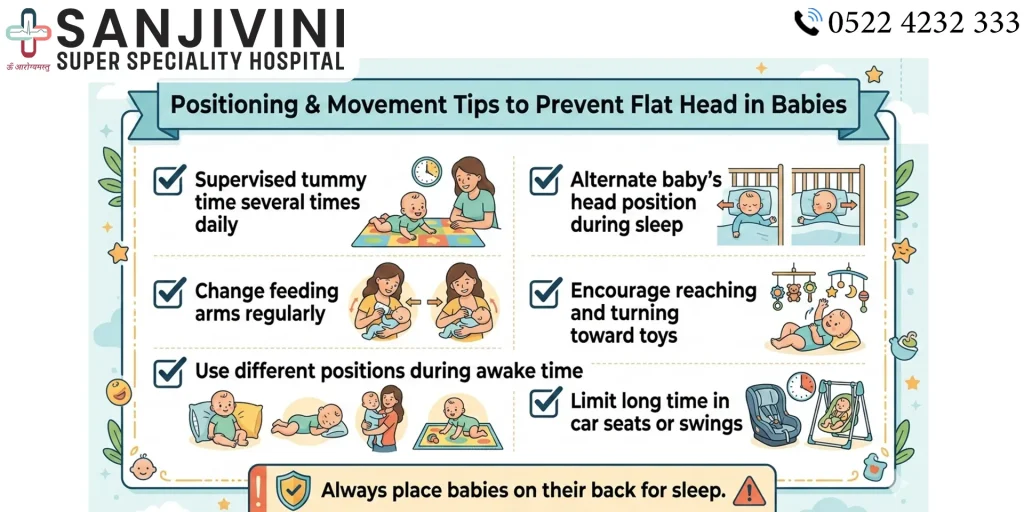
- Practice supervised tummy time several times daily
- Alternate head position during sleep
- Change feeding arms regularly
- Encourage reaching and turning movements
- Use infant positioning techniques during awake time
- Limit prolonged time in car seats or swings
Always keep babies on their backs in order to sleep, but change the direction of their heads in order to decrease pressure. Regular tummy time for babies also supports baby motor development and neck strength, reducing risk of flattening.
When to Worry About Baby Head Shape
Parents should monitor head shape changes as part of routine baby development milestones. Seek guidance if:
- Flattening worsens after 4–6 months
- The baby always prefers one side
- Facial asymmetry appears
- Neck movement seems limited
- Head shape does not improve with repositioning
Early evaluation allows timely pediatric consultation for flat head and prevents complications. Families do prefer consulting specialists at Sanjivini Super Speciality Hospital. As it is recognized as the best paediatric hospital in Lucknow for assessment and reassurance.
Treatment Options for Plagiocephaly
The majority of the flat head syndrome in infants cases get better without medication. Common flat head baby treatment approaches include:
- Repositioning therapy at home
- Physiotherapy for neck stiffness
- Monitoring baby skull development
- Helmet therapy in selected cases
The baby helmet therapy is advised in instances when there is severe flattening and failure of conservative measures. Early intervention has the advantages of improved results and quicker correction.
How to Fix Flat Head in Infants Naturally
Parents can actively support improvement by:
- Increasing supervised tummy time
- Encouraging active movement and play
- Holding the baby upright more often
- Alternating crib positioning
- Providing stimulating visual toys on different sides
These steps promote symmetrical head growth and healthy development.
Possible Side Effects if Untreated
Mild cases rarely cause problems, but significant baby head flattening side effects may include:
- Facial asymmetry
- Jaw alignment issues
- Cosmetic concerns later in life
- Delayed motor development (rare)
Sanjivini Super Speciality Hospital for Expert Baby Head Shape Evaluation

Consult a doctor if you notice persistent flattening or developmental concerns. Consulting the best pediatrician in Lucknow in Sanjivini Super Specialty Hospital in Lucknow will observe the skull growth of your baby and provide a relief to the parents.
Sanjivini’s pediatrics & neonatology services in a women’s and children’s hospital environment provide comprehensive care for infant growth and development.
Frequently Asked Questions
When to worry about baby head shape?
Medical opinion should be sought by the parents in case head flattening does not improve or becomes severe by 5 to 6 months, or is associated with neck stiffness or asymmetry of the face.
How to prevent flat head in babies?
Avoid flat head syndrome in your baby by providing him with tummy time under supervision, alternating head positions while sleeping, make your baby move, and do not spend much time lying on one position.
Can flat head syndrome correct itself?
Yes. The flat heads of many babies get better with time as they develop and gain head control as well as become more active.
When should I search for a children hospital near me?
You should look for a children hospital near me like the Sanjivini Hospital if flattening is severe, persistent, or associated with developmental concerns requiring pediatric evaluation.
When should I consult a neonatologist near me?
See a neonatologist in one of the best pediatric hospitals in Lucknow in case your baby is premature, medically challenged, or has severe problems with his or her head shape.
Your Baby’s Head Shape: What Parents Should Remember
Flat head syndrome in babies is ordinary and it may be easily treated through basic prevention measures. As babies grow and start moving more, their head shape will become normal on its own.
At the same time, early guidance from a specialist can make things super easy for parents. Professional support also helps track healthy development and gives families more confidence at this stage.
Pingback: finasteride minoxidil
Pingback: ursodiol cost
Pingback: zyloprim allopurinol
Pingback: prevacid over the counter
Pingback: buy vibramycin online
Pingback: augmentin
Pingback: flagyl
Pingback: lasix diuretic medicine