

Medically Verified by – Dr Jitendra Singh M.B.B.S, M.D (Pediatrician & Neonatologist)
Teething is a natural process in early childhood but it is painful to babies and can make the parents anxious. Teething troubles in babies is a difficult process to many families and lack of awareness about what to expect will make the process more stressful. Understanding what is normal and what is not will surely help parents to respond calmly and effectively.
This guide will explain all the teething myths vs facts. And even the common symptoms and safe ways on how parents can comfort their child in this developmental stage.
What Is Teething?
Teething refers to a process when the first teeth of the baby begin to emerge through the gums, hence this is teething. This stage is an important part of baby dental development and even the overall infant oral health as well.
Most babies begin the teething process between 4 to 7 months, although the exact teething age varies for each child. Some may start this earlier while others may develop teeth closer to their first birthday. The teething timeline continues until about for 2–3 years of age when the full set of primary teeth appears.
Parents even notice teething troubles in babies in this period like irritability or gum discomfort as well as sleep changes. For that you can visit the best paediatric hospital in Lucknow such as Sanjivini Hospital for all the teething problems of your child.
Signs of Teething in Babies: What Parents Should Know
Recognizing all the baby teething symptoms will help parents a lot to distinguish normal discomfort from illness. Common symptoms of teething are as follows:
- Excessive drooling
- Chewing on objects or fingers
- Swollen or sensitive gums
- Irritability or fussiness
- Not able to sleep
- Slight increase in the body temperature (not high fever)
Such indications normally appear some days before a tooth is removed and disappears after. However, parents must look for signs that could indicate that the baby has got a illness and it is not just teething.
Parents who want to learn more about detailed baby teething symptoms and eruption patterns may refer to this helpful guide from the NHS.
Teething Symptoms vs Illness
Many parents associate unrelated symptoms with teething. Understanding the difference prevents delays in medical care. Teething may cause:
- Mild discomfort
- Gum irritation
- Temporary fussiness
But symptoms such as:
- High fever
- Persistent diarrhea
- Vomiting
- Severe lethargy
are usually not caused by teething and require medical evaluation. Questions like “Is fever normal during teething?” or “Do babies get diarrhea while teething?” often arise, but research shows these are commonly linked to infections rather than tooth eruption.
Common Teething Myths vs Facts
There are not one but so many misconceptions about teething troubles in babies. But by knowing the facts is the only way to help parents make safe decisions.
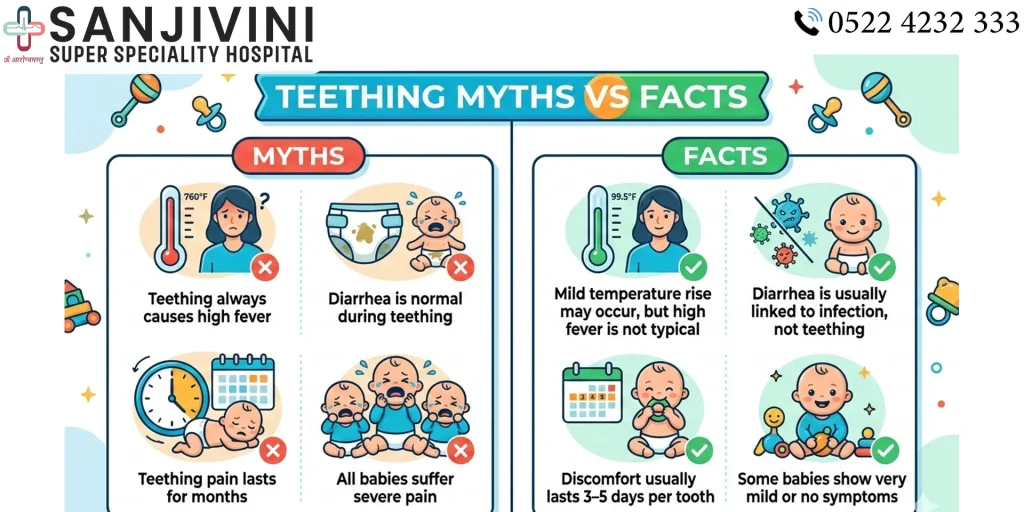
Myth: Teething always causes fever.
Fact: a little bit of rise in temperature is possible but high fever is not typical (teething fever myth).
Myth: Diarrhea is a normal teething symptom.
Fact: Diarrhea usually indicates infection or dietary changes, not teething.
Myth: Teething pain lasts for months continuously.
Fact: Discomfort usually occurs for a few days around tooth eruption, for typically 3–5 days per tooth.
Myth: All babies experience severe pain.
Fact: Some babies show very mild or no symptoms.
How to Soothe Teething Pain in Babies
Safe comfort measures can significantly reduce teething problems. Parents often look for baby gum pain relief options that are gentle and very much effective. These are some methods that can be helpful in teething pain relief for babies:
- Gently massaging the baby’s gums with clean fingers
- Offering chilled (not frozen) teething rings
- Using a clean, cool cloth for chewing
- Provide extra comfort and cuddling to baby
- Have proper feeding routines
These are among the safest teething remedies for babies. Many families even try some home remedies for teething babies, however unsafe remedies such as alcohol and herbal gels should not be used without the advice of the doctor. Parents ask how to soothe a teething baby or how to help a teething baby sleep — the answer to this question is maintaining bedtime routines and comfort measures as it often improves sleep quality during this phase.
When to See a Pediatrician for Teething Troubles

While teething troubles in babies can be managed at home itself, pediatrician advice for teething might be needed if:
- Symptoms seem severe or prolonged
- The baby refuses feeds repeatedly
- High fever develops
- Sleep disruption becomes extreme
- Parents are unsure whether symptoms relate to illness
Consult the best pediatrician in Lucknow for accurate evaluation and reassurance of your baby. Facilities like the Sanjivini Super Speciality Hospital in Lucknow give specialized Pediatrics & Neonatology services for infant health concerns.
Frequently Asked Questions
How long does teething pain last?
Only a few days before and after a tooth comes out is normally accompanied by some pain. Every phase is a temporary one, despite the fact that the entire process of teething may require months.
What are the safest teething remedies for infants?
Some of the safe remedies to try gum massage and chilled teething rings. Give comfort measures and please avoid any type of medications or gels unless it is recommended by a pediatrician.
When should I visit a children hospital near me for teething?
Visit the best pediatric hospital in Lucknow in case your baby has got a high fever, continues to experience diarrhea, refuses to eat, and the symptoms do not improve.
When should I consult a neonatologist near me?
When your little one has a problem with feeding, is crying a lot or experiences growth concerns and teething pain, consult a neonatologist near you at a women’s and children’s hospital for specialized care.
Pingback: metoclopramide 5mg
Pingback: remeron for sleep in kids
Pingback: rifampin
Pingback: esomeprazole 40mg capsules