


Medically Verified by – Dr Humaira Siddiqui M.B.B.S, M.S (Obs & Gyne)
Pregnancy changes almost everything, including your skin. Some women have acne breakouts. Some experience dry, itchy skin. Others notice dark patches appearing on their face. And almost everyone wonders whether their usual skincare products are still safe to use.
Safe skincare during pregnancy is not complicated. But it does require knowing which ingredients to keep in your skincare products, which to cut, and what to replace them in your skincare products. This guide covers all of it.
Common Skin Changes During Pregnancy
Hormones are behind most pregnancy-related skin changes. As oestrogen and progesterone levels rise and fall, your skin responds. Here is what many women experience:
- Hormonal acne during pregnancy: Rising progesterone increases oil production. Breakouts are common, especially in the first trimester.
- Dry skin: The body uses more water to support the baby. This can leave skin feeling tight, flaky, and uncomfortable.
- Itchy skin: As the belly stretches, skin can become dry and itchy. In some cases, itching is linked to hormonal changes across the whole body.
- Melasma: Also called the mask of pregnancy, melasma causes dark patches on the cheeks, forehead, and upper lip. Pregnancy pigmentation treatment needs to be chosen carefully since many standard options are not safe during pregnancy.
- Stretch marks: These appear as the skin stretches to accommodate the growing baby. Staying moisturised helps prevent stretch marks in pregnancy, though genetics also play an important role.
One thing worth clearing up is the pregnancy glow myth. Some women do experience brighter skin due to increased blood flow. But for many, the reality includes at least one of the issues listed above.
Ingredients to Avoid During Pregnancy
Key ingredients to watch during pregnancy. Even when used topically, some ingredients can be absorbed into the bloodstream and may affect fetal development. Always check your product labels for the following:
- Retinol and retinoids: Retinol is a form of Vitamin A linked to birth defects in high doses. It is commonly found in anti-aging creams and anti-wrinkle serums. These should be avoided during pregnancy. Less harmful options include natural ingredients like bakuchiol or aloe vera.
- Salicylic acid: High concentrations of salicylic acid should be avoided during pregnancy. Low-dose salicylic acid in face washes may be less harmful, but it is still best to check with your doctor. Safer alternatives include azelaic acid or gentle neem-based cleansers.
- Benzoyl peroxide: This ingredient is commonly used in acne creams, gels, and spot treatments. Mild clay masks or diluted tea tree oil can be used as alternatives.
- Chemical sunscreen filters: Ingredients such as oxybenzone and octinoxate are found in many chemical sunscreen lotions and sprays and may enter the bloodstream. Mineral sunscreens with zinc oxide or titanium dioxide are considered safer options during pregnancy.
- Hydroquinone: Hydroquinone is used to treat pigmentation and dark spots and is commonly found in skin-lightening creams and anti-pigmentation serums. Because it has a high absorption rate, it is usually advised to avoid it. Vitamin C or licorice extract can be used instead.
- Formaldehyde-releasing preservatives: These preservatives may be found in nail polishes, nail treatments, and some hair smoothing products. It is safer to choose formaldehyde-free products during pregnancy.
When in doubt about any ingredient, your pregnancy specialist or a dermatologist is the right person to ask, for that you can visit Sanjivini Super Speciality Hospital.
Safe Skincare Ingredients to Use During Pregnancy
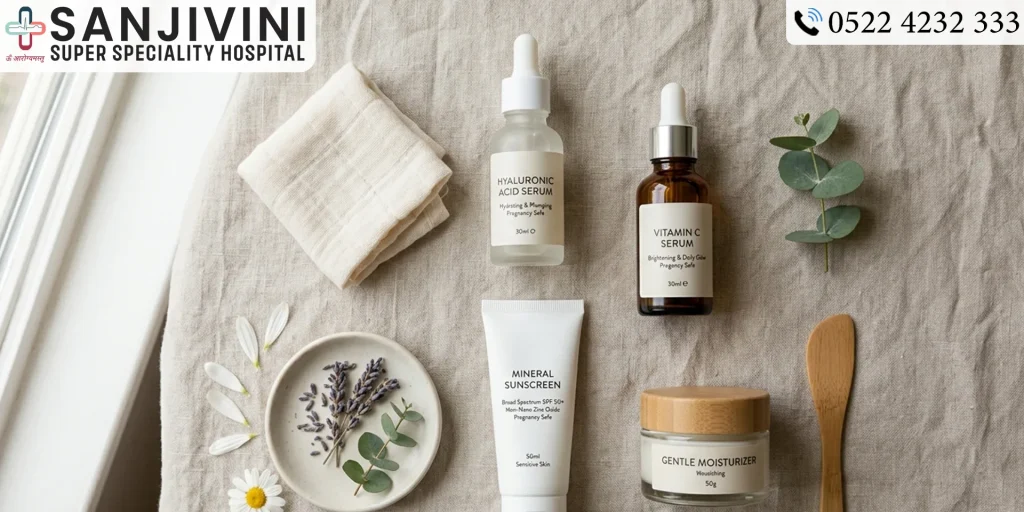
There are good options for every skin concern. Here are the ingredients that are considered safe:
- Vitamin C: A topical antioxidant commonly found in brightening serums and day creams. It helps improve skin glow and reduce mild pigmentation.
- Azelaic acid: Safe during pregnancy and effective for both hormonal acne during pregnancy and melasma. It is a strong alternative to retinol for treating uneven skin tone.
- Glycolic acid (low dose): Found in many cleansers and toners. Low concentrations help improve skin texture by removing dead skin cells.
- Niacinamide: Found in serums and moisturisers. Helps even skin tone, reduces redness, and strengthens the skin barrier. Widely available and pregnancy-safe.
- Hyaluronic acid: A gentle hydrating ingredient found in moisturisers, hydrating serums, and face masks. It helps keep the skin soft and hydrated.
- Coconut oil and shea butter: Rich moisturisers for the body commonly found in body lotions and stretch mark creams. Useful to help prevent stretch marks in pregnancy when applied consistently to the belly, hips, and thighs.
A Simple Pregnancy Skincare Routine
You do not need a multi step skin care routine. A basic pregnancy skincare routine that covers the essentials is enough:
Morning:
- Gentle cleanser
- Toner (natural options like rose water)
- Vitamin C serum (optional)
- Hyaluronic acid moisturiser
- Mineral SPF sunscreen
Evening:
- Gentle cleanser
- Azelaic acid or niacinamide (for acne or pigmentation)
- Hyaluronic acid moisturiser
- Body oil or butter on belly, hips, and thighs
Keep it consistent, as over-layering the products may cause irritation. Following a safe skincare during pregnancy does not mean using more beauty products instead means using the right ones.
When to See a Doctor About Skin Changes in Pregnancy

Most pregnancy skin changes are normal. But some need medical attention. See a doctor if you notice severe itching all over the body, a rash that spreads quickly, or skin changes that affect your daily life. A dermatologist handles skin-specific concerns. Your gynaecologist handles anything tied to pregnancy hormones or complications.
If you are searching for a good gynaecologist, then Sanjivini Super Speciality hospital has one of the best gynaecologists in Lucknow. Their department of Gynaecology and Obstetrics provides:
- Consultation for pregnancy-related skin changes and rashes
- Guidance on safe skincare products and routines during pregnancy
- Treatment for acne, pigmentation, and other skin concerns during pregnancy
- Advice on managing itching, stretch marks, and sensitive skin
Sanjivini is widely regarded as the best maternity hospital in Lucknow for comprehensive women’s care.
Frequently Asked Questions
Can I use products containing retinol or salicylic acid while pregnant?
Retinol should be completely avoided during pregnancy. High-dose salicylic acid should also be avoided. Low-dose topical salicylic acid in cleansers is lower risk but check with your doctor before using it.
Is sunscreen safe to use during pregnancy?
Yes, but choose physical sunscreen with zinc oxide or titanium dioxide. Avoid chemical sunscreens containing oxybenzone or octinoxate during pregnancy.
What are other harmful ingredients found in skincare products?
Other harmful ingredients include benzoyl peroxide, hydroquinone, chemical sunscreen filters like oxybenzone, and formaldehyde-releasing preservatives.
Where can I find a gynaecology hospital near me in Lucknow?
Sanjivini Super Speciality Hospital is a leading gynaecology hospital in Lucknow. They offer full obstetric and gynaecological care under one roof, making it a reliable choice for pregnancy-related consultations and care.
Final Thoughts
Safe skincare during pregnancy does not mean giving up your routine. It means making small, informed swaps.
Choose gentle products and avoid harmful ingredients and keep your routine simple. See how your skin is responding after using and when in doubt about any ingredient or product then consult a good doctor first before using it.
Your skin and your baby’s health both deserve that extra step.