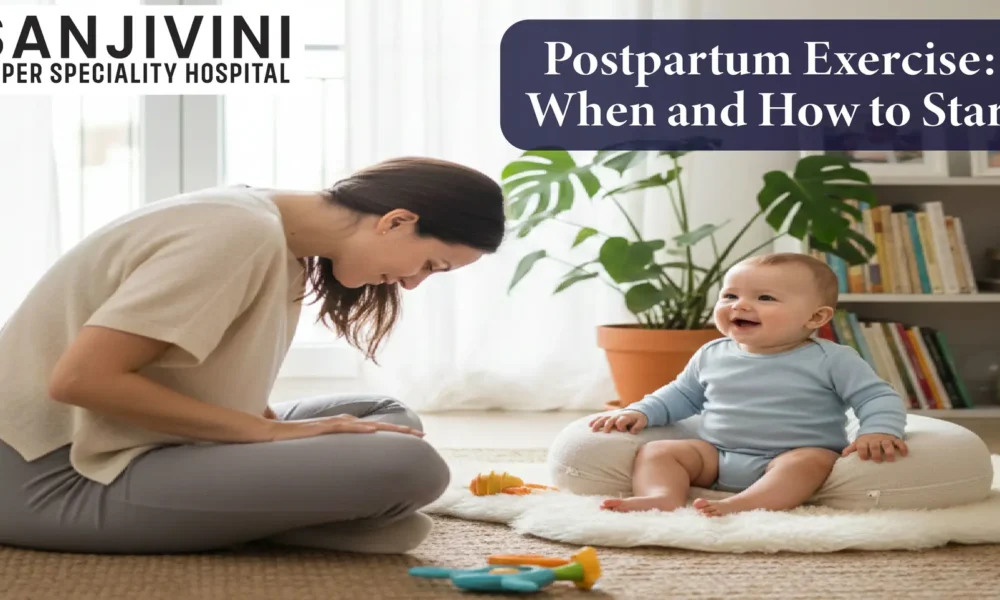
Postpartum Exercise: When and How to Start
Medically Verified by – Dr Humaira Siddiqui M.B.B.S, M.S (Obs & Gyne)
After childbirth a woman’s body goes through many changes. There are changes in the body emotions and hormones. Having a baby brings happiness but at the same time the body starts healing slowly. Many new mothers keep thinking about postpartum exercise, i.e., exercise after delivery. They wonder when they can start what exercises are safe and how exercise helps the body feel better.
Exercise after delivery is not about losing weight fast or doing intense workouts. It is about getting your strength back, moving your body better and reducing pain, that’s it. This guide explains when you can start exercising after delivery, which exercises are safe after pregnancy and how the type of delivery can affect your exercise routine.
Why Postpartum Exercise Is Important
During pregnancy the muscles, joints, pelvic floor and back go through a lot. After delivery the body needs some movement to start feeling normal again and get strength back. Postpartum exercise supports:
- Faster postpartum recovery
- Improved blood circulation
- Reduced postnatal back pain
- Better posture and core stability
- Strengthening of pelvic floor muscles
- Improved mood and reduced risk of postpartum depression
- Healthy weight management
Post pregnancy exercise also helps prevent long-term issues like urinary leakage, pelvic organ weakness, and chronic back pain.
When to Start Exercise After Delivery
When you can start exercising after childbirth depends on how your delivery was and how your body is feeling after birth.
Postpartum Exercise After Normal Delivery
If you had a normal delivery and there were no problems, you can start moving a little after a few days. You may start with:
- Slow walking
- Light stretching
- Breathing exercises
- Pelvic floor exercises
Most women can slowly do more after 4 to 6 weeks once the doctor says it is okay.
Postpartum Exercise After C-Section
After a C-section the body needs more time because it is a big surgery. In this case:
- You can start walking slowly after 2 to 3 weeks
- Exercises for stomach and core should be started only after 6 to 8 weeks
- You should wait till the scar heals fully before doing hard exercises
Postpartum exercise after C-section should always be done with a doctor’s advice. If pain keeps coming again and again or feels uncomfortable, it is better to wait. Women who had a C-section should focus on getting better first. Learning how to take care of yourself after a C-section helps you return to exercise safely.
Special Considerations
If you had a high-risk pregnancy, heavy bleeding, stitches or problems during the delivery then your body might need more time to recover. First talk to a pregnancy doctor before starting any postpartum workout.
At a medically supervised setting like Sanjivini Super Speciality Hospital, regarded as the best maternity hospital in Lucknow, doctors guide new mothers on when and how to start exercise safely based on how their body is doing.
Safe Exercises After Pregnancy
Starting to move again after having a baby could feel tricky. As the key here is to keep things gentle and take it slow so that your body has time to heal properly.
1. Pelvic Floor Exercises
The pelvic floor exercises are known as Kegels which are essential after the childbirth. Pregnancy and delivery weaken these muscles, leading to bladder control issues if left untreated. By doing them it will:
- Help your bladder
- Reduced risk of pelvic organ prolapse
- Faster postpartum recovery
2. Breathing and Core Activation
Deep belly breaths do more than relax you as they wake up your core muscles and help your stomach heal too. If your tummy muscles feel like they’ve separated (diastasis recti), gentle diastasis recti exercises are very helpful to close that gap overtime. No rushing, just small movements, that’s it.
3. Walking
Walking is probably the easiest exercise, so start slow and each day try yourself to do a little more. Stand tall wear your comfy shoes and let your body set the pace. It gets your blood moving and gives you a bit more energy, and can even help with postnatal back pain.
4. Stretching and Mobility Exercises
All that sitting and feeding or carrying your baby will make your back, hips, and shoulders very stiff. So stretching can help a lot. Focus on your neck, shoulders, lower back, hips.
Exercises to Avoid in Early Postpartum
Not all workouts are safe immediately after childbirth. Avoid doing:
- Activities like running or jumping
- Lifting heavy weights
- Doing crunches and sit-ups
- Planks in the first few weeks
- Any exercise that can causes pain, discomfort, bleeding
The best thing during postpartum recovery is listening to your body as it matters more than pushing yourself. If something doesn’t feel right then it’s better to stop and take it slow.
Managing Pain and Discomfort After Delivery
Managing pain after delivery is a very important part of recovery. Feeling some pain or slight discomfort is normal in the beginning, but if the pain keeps coming back again and again, lasts for many days or starts feeling too strong then it’s something that should not be ignored. These postnatal exercise helps in:
- Improving muscle support
- Reduces body stiffness
- Improves blood flow
- Helps body heal faster
If you notice very strong pain or swelling or unusual bleeding during recovery talk to your doctor immediately.
Role of Postnatal Care in Recovery
After delivery postnatal care helps doctors make sure that a mother is healing well both physically and emotionally. Regular follow-up visits allow doctors to check for common issues like weak pelvic floor muscles, slow core recovery or pain that does not go away.
While at Sanjivini Hospital our gynaecology and obstetrics team offers complete postnatal support to you and even guides new mothers on the safe exercises and proper recovery at every stage.
Expert Postpartum Care at Sanjivini Super Speciality Hospital
A lot of people in Lucknow know about the Sanjivini Super Speciality Hospital which is one of the best maternity care hospitals in Lucknow. As the hospital supports women not just during delivery but even throughout their pregnancy and also after delivery. The best pregnancy hospital in Lucknow, the hospital provides:
- Personalized postnatal care plans
- Guidance on postpartum fitness and recovery
- Pelvic floor rehabilitation
- Pain management after delivery
- Support for high-risk pregnancy recovery
Women can consult the best gynaecologist in Lucknow, pregnancy specialists, and the best doctor for pregnancy in Lucknow are all available under one roof.
The hospital also functions as a women’s wellness center due to which many mothers prefer consulting the best lady doctor for pregnancy in Lucknow for comfort and continuity of care.
Frequently Asked Questions
When can I start postpartum exercise?
Most women can begin gentle movements within a few days after normal delivery and after 2–3 weeks following a C-section, with doctor approval.
Is exercise after childbirth safe?
Yes, when done gradually and correctly. Safe exercises after pregnancy support healing and reduce complications.
Can postpartum exercise help with back pain?
It can help a lot as after pregnancy the core and back muscles become weak, and simple postnatal exercises are very helpful to strengthen them and reduce back pain.
What exercises help with abdominal recovery?
Breathing exercises, light core movements and exercises that are meant for diastasis recti work best.
Should I consult a doctor before starting a postpartum workout?
Yes, always talk to a doctor first. Because consultation helps you understand which exercises are safe for your body based on how your delivery and recovery are going.
A Balanced and Safe Return to Physical Activity
Postpartum exercise is not about doing too much or pushing your body. It is about giving your body time to heal and doing the right exercises at the right time. When you exercise safely and with proper guidance then it helps you to recover better and also feel better emotionally.
At Sanjivini Super Speciality Hospital, our doctors and maternity care teams support women after their delivery and guide them through safe postnatal care so that each and every mother can recover with confidence and stay healthy in the long run.

Premature Baby Care: What Parents Should.
Premature baby care requires special medical attention, proper nutrition, and close monitoring in the early weeks of life. Babies born.
Read More
Signs of Developmental Delays: When to.
Every child grows at a different pace, but missing key milestones may signal developmental delays. This guide explains the early.
Read More